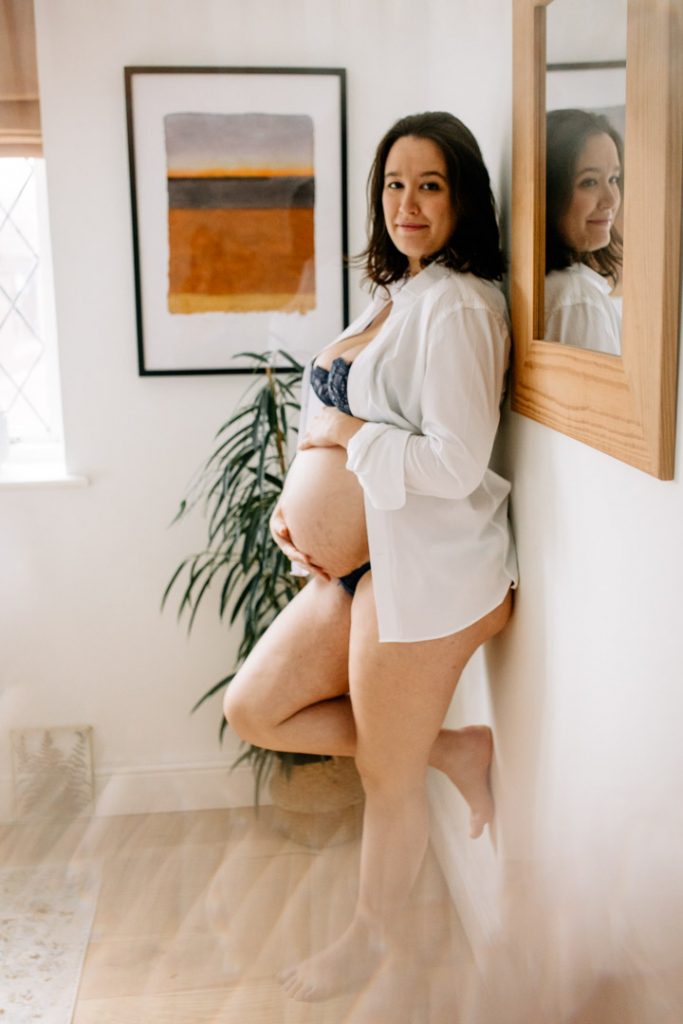
I cannot believe it. It has happened again! Two births that have occurred within hours of each other, 12h to be exact this time. I 100% made it but it was hard. On only 3h of sleep after having been awake for 24h+ I relied heavily on my second midwife to keep us all safe and to take the lead while I slept another hour at the second clients house. I woke up as the client made some pushing sounds, that’s my call! I thought. Kirsti, my second midwife, was a life saver and also those other local midwives that agreed to be on call for us as third midwives in case we needed them.
Because of this happening again (I recently posted about the 3 births I attended in 48h in June) I have decided to only take one client per month. This will only apply to clients that book me from the start of their pregnancies as a small perk if they do so. This way I can guarantee to be there for their births, fresh and ready for action. As much as we have robust back up plans if we can’t attend, clients want their midwife there! It’s the whole point of booking an independent midwife!
Unfortunately, for those booking smaller packages I will still take the risk and book 2/month as my profit is minimal with those clients (and believe me, I’m not in this profession for the money, I make the least I have ever made as a midwife or lecturer!). However these clients generally book minimal postnatal care alongside NHS care which frees me up considerably.
I am loving being an independent midwife (IM), I love the freedom I have with my diary, I love supporting clients to achieve amazing births, and I love being able to be home with my little one. However, after some full-on 21 months as an IM between starting the business and actively supporting births, it is time to make some changes! If you want to know more about how I am slowing down for the colder months ahead, read on.
Slowing down for the colder months
Without realising it I have now been an independent midwife for over a year (15 months) since I first got paid for my services. However it has been 21 months since I first started working on the business! And it has been non-stop. Sometimes at high intensity and sometimes at low intensity but every free productive hour I had I dedicated it to growing the business. It has been brilliant and I have supported a total of 15 families so far. But after being on call for 6 months straight for 10 births (waiting on 1 still) my family has been affected by how busy I have been!
This is why I have decided to drop my caseload from 2 clients/month to 1 a month and enjoy the off call period I have from mid October until the end of the year with no pressure to book new clients. Several births a month not always overlap but I have had to go from one birth to the next with little time to sleep twice already and it’s intense. What is more, care in the postnatal period is the most destabilising for our routine as suddenly I go from maybe 3 visits a week + admin the rest of the days to visits every day, double visits some days, being out of the house for 4-8h every day and doing admin at 10pm. For most people this is not a problem but my partner and I are full time carers for his mum with advanced vascular dementia and we have also made the conscious decision to not send our little boy to nursery yet. We believe that it’s important that we raise our son ourselves for the first 3 years and that he has a secure attachment with us. Therefore, we are prioritising family, caring and ourselves before work and money.
I am actually looking forward to being off call this autumn/winter as I have a natural gap on my diary. Winter is a time to slow down, reflect and re-energise. I have finally got myself a gym membership after 3 years of no exercise. When you are in a caring profession, with small kids and adult dependents it’s hard to look after yourself, this is why this step feels so important. To take a step back, look after myself and trust that I will book some clients for summer without dedicating every waking moment to growing the business.
It is important for me to say this so that you know that if you are deciding on investing in my services for your homebirth, you know that you are investing in someone that, likely, has similar values to you. And that your money goes to support a family living simply.
If you’re interested in my services, please be reassured that I still check my emails every day and I would love to hear from you and how I can help you achieve the birth of your dreams! Having only one client due a month means more quality time and attention to that client too.
Lastly, I hope that you two can slow down this winter and invest in what matters the most.

Hello! My name is Irene Vine and I am an independent midwife covering Suffolk, Essex, Cambridge and East London. I provide full antenatal, postnatal and birth care including homebirths and outside of guidelines care. I am passionate about supporting women achieve a birth experience where they feel empowered, heard and understood. If you would like to experience the best possible care with unrushed appointments and a midwife who is always at the other end of the phone, give me a call! I cover most cities and villages in East Anglia, such as Chelmsford, Colchester, Ipswich, Cambridge, Harlow, London or Southend.